
Corpus Reopens Desal Negotiations After Hours of Public Opposition
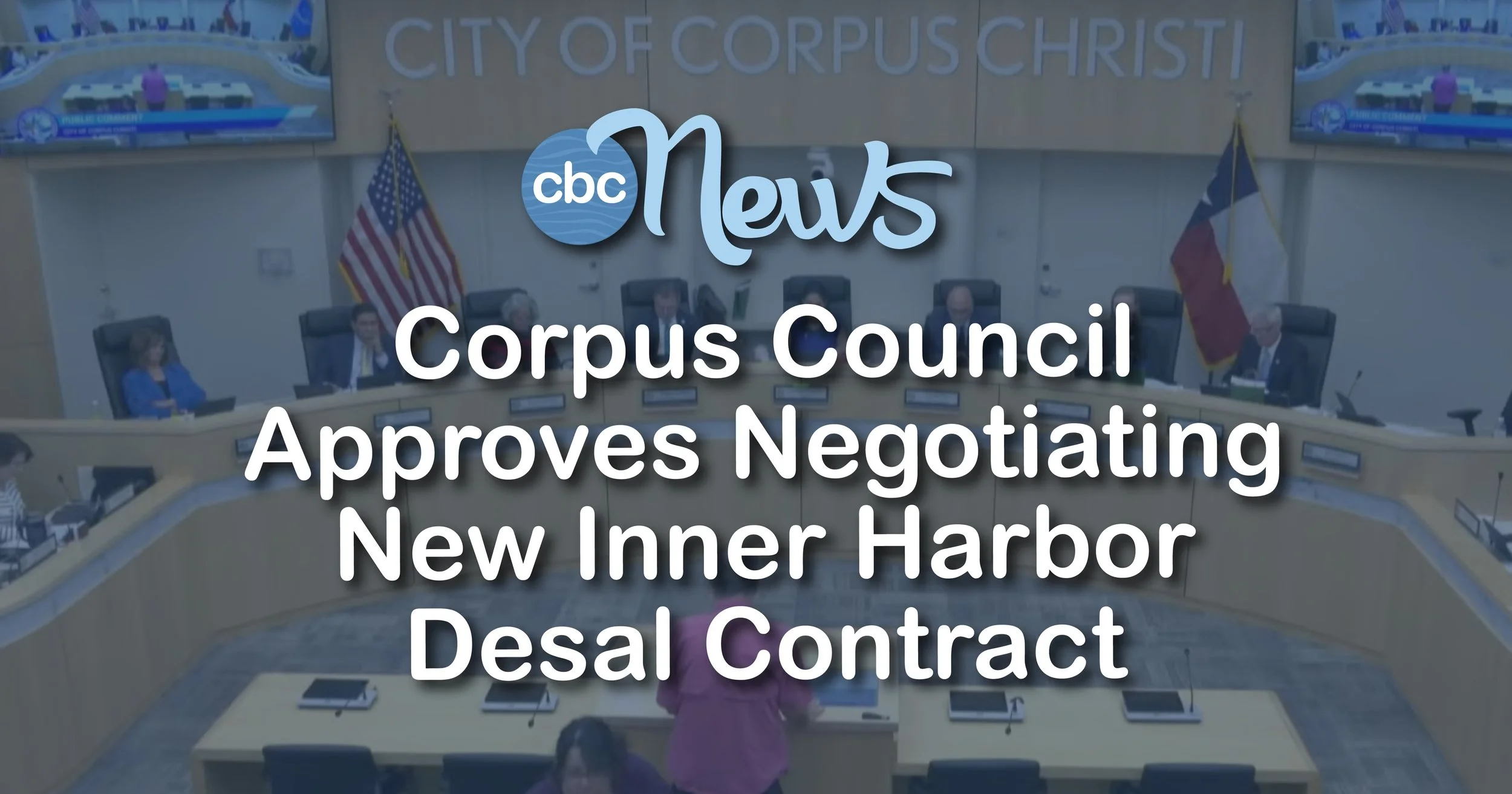
Over the objections of dozens of community advocates, the Corpus Christi City Council voted Feb. 24 to direct city staff to proceed with negotiating a design-build contract for the proposed Inner Harbor seawater desalination plant, reviving a project the council halted last fall.
The vote was 5–3, with one abstention. Mayor Paulette Guajardo and Councilmembers Carolyn Vaughn, Everett Roy, Mark Scott, and Roland Barrera supported negotiations; Sylvia Campos, Gil Hernandez, and Kaylynn Paxson voted no; Eric Cantu abstained without explanation.
The action follows a September vote to end the previous contract with Kiewit after the project’s cost estimate reached $1.2 billion. Under the revived approach, staff will negotiate a new price with Corpus Christi Desal Partners (CCDP), the second-ranked bidder in the earlier procurement, although a preliminary figure of at least $978.7 million has already been released.
City Council chambers were packed, dominated by community members testifying in opposition to the desalination plant, with strong representation from residents of the historically Black and Hispanic Hillcrest neighborhood, where the project is sited. The day before the vote, Hillcrest neighbors held a press conference vowing continued resistance to the project.
Opponents’ public testimony also focused on cost, environmental impact, and who would benefit. Speakers noted that the new proposal would increase water bills for the average home by $165 per year, even though the desal water is only needed to supply industrial users; that industry uses nearly 60% of the region's water; and that a far-field model of the project's environmental impact on the bay has yet to be completed. If built, the Inner Harbor plant would be the only desal facility in the world discharging brine into a closed-bay system.
District 5 Councilmember Gil Hernandez also warned that taking on the Inner Harbor project would double the city’s debt burden, arguing that borrowing at that scale would constrain future water decisions; while Councilmember Paxson noted that even while the overall cost of the Inner Harbor project had decreased from $1.2 billion, the impact on residential water bills had actually increased.
The next major decision point is expected in April, when council could be asked to consider the negotiated agreement and whether to advance the project to a 60% design-build stage.