
Opinion: More than ever, the fight for clean air and water is in your hands
President Donald Trump is throwing out the federal government’s most basic tools for protecting Americans from industrial pollution and climate change.
On February 12, Trump announced plans to rescind the Environmental Protection Agency’s (EPA) “endangerment finding,” the scientific and legal determination that greenhouse gases threaten public health.
This is the foundation for enacting federal limits on carbon dioxide, methane and other gas emissions that climate scientists say are supercharging dangerous heat waves, droughts, wildfires and other extreme weather.
A week later, Trump’s EPA rolled back air pollution limits for coal-burning power plants, allowing them to release more heavy metals including arsenic, lead and mercury, a neurotoxin linked to brain damage.
These decisions are horrifying, but not surprising. They’re also clarifying. We now know with certainty exactly where the federal government stands in the fight against heavy polluters: not with the people.
Everyone knows that things are distinctly no better in Texas, where state government jumps at every opportunity to support big industry.
Consider the recent Public Health Watch study showing that over the past 25 years, the Texas Commission on Environmental Quality (TCEQ) has denied less than 0.5% of air permit renewals, and rejected only a handful of initial permits and amendments in tens of thousands of applications.
Consider also the TCEQ’s “one-mile rule,” the agency’s arbitrary policy that blocks Texans who live more than a mile from a polluting facility from being recognized as affected persons in permitting fights, even when air or water quality is obviously impacted over a vastly larger area.
(Now that the EPA has handed off federal responsibility for monitoring the state’s carbon sequestration injection wells to the TCEQ, we’re poised to find out which of the two agencies does nothing more effectively.)
The bottom line? When it comes to protecting our climate and communities from industrial pollution and safeguarding our natural resources, no one – not Washington, not Austin – is coming to save us.
That means it’s time to get busy saving ourselves. Now more than ever, like it or not, the future of our communities is truly in our own hands, and the actions we take (or don’t) at the local level matter much more profoundly.
The good news is that local communities all across Texas are indeed stepping up to push back on polluting projects – and it’s working.
In Corpus Christi, residents organized for years to stop a proposed $1.2 billion desalination plant that was only needed to supply water to fossil fuel industries. In September, the City Council voted to defund project design.
Across the bay in Ingleside, neighbors rallied to fight a proposed ammonia plant near a local elementary school. When the project’s building permit came before the Ingleside City Council in December, it failed.
Just up the Gulf coast, in Calhoun County, Exxon has hit pause on a proposed plastics facility following a legal dispute over local tax breaks.
And most recently, in South Texas, the Point Isabel ISD school board voted unanimously to reject a $160 million dollar tax break for the Texas LNG fossil fuel project after community members raised concerns.
These are not just anecdotes; they are a blueprint for environmental protection in an era of federal and state retreat. To save our communities, we must build organized local power, and then use that power to make local officials choose between health, safety and sustainability or the demands of big polluters and resource-draining industries.
So, let’s get busy. Let’s connect with our neighbors and advocacy groups in our communities. Let’s go to City Hall or the County Courthouse and tell our elected representatives exactly what we expect. Let’s vote for local candidates and support ballot measures that protect our environment. Let’s protest, loudly, when it’s needed. We can do it – because we have to.
The fight against polluting industry has to go local, and failing to meet this moment cannot be an option. There is simply too much on the line – from catastrophic long-term global climate change to a cascade of immediate, neighborhood-level public health risks – for Texans to sit and wait for further proof that we are the ones we have been waiting for.
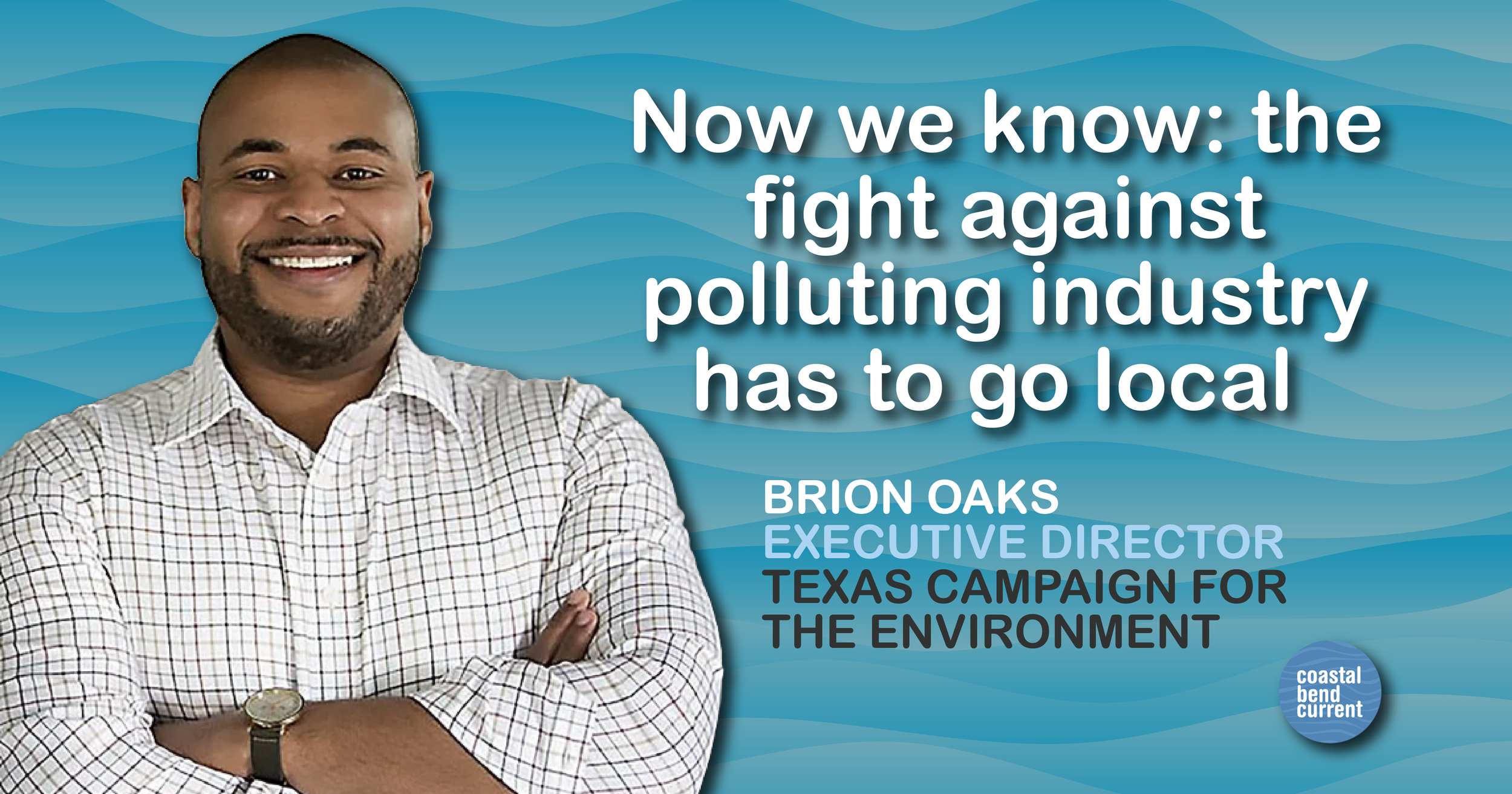
Brion Oaks is Executive Director of Texas Campaign for the Environment